
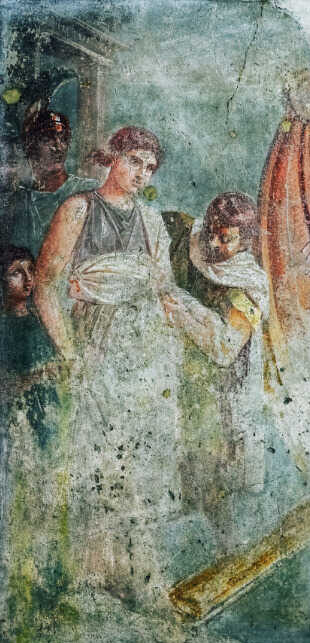
“Whom the gods would destroy they first make mad” is a line habitually misquoted and universally believed. But Greek myth, being written by people who understood human weakness, suggests something crueller: whom the gods would destroy, they first make beautiful.
Helen, for example. Helen was the daughter of Zeus, which meant two things: she was extraordinarily beautiful and she never stood a chance. At the age of 12 she was abducted by Theseus, aged 50, who had founded Athens, and decided that history alone was not enough. She was rescued by her brothers and restored to respectability—an ancient euphemism for being married off quickly.
Her husband was Menelaus, king of Sparta, a man who believed civilisation was something best defended with a sword. Suspicious of foreigners and hostile to dissent, Menelaus ran his kingdom with the warmth of a border checkpoint. While he was away suppressing rebellion in Messenia—a land known for olives and the unfortunate habit of wanting autonomy—Helen remained in the palace, admired, guarded and bored.
Across the Aegean in Troy lived Paris, son of King Priam. Paris grew up handsome, charming and convinced the universe existed for his pleasure. When asked to judge a beauty contest between goddesses, he awarded Aphrodite a golden apple marked To the Fairest. In return she promised him the most beautiful woman in the world.
That woman was Helen.
Paris arrived in Sparta, seduced her and carried her off to Troy. Menelaus returned from killing Messenians to find his wife gone and his masculinity dented. He responded in the only way available to wounded pride: by starting a continental war. A thousand ships were launched. Tens of thousands died. Helen’s face became immortal; the soldiers became statistics.
Homer’s Iliad celebrates heroism while tactfully overlooking the inconvenient truth that the war was fought for a vain man’s ego and a woman whose primary crime was being gorgeous. Achilles died from a heel wound—proof that even invulnerable men have one soft spot. Paris, who fired the fatal arrow from behind the walls, survived long enough to confirm that charm and cowardice often share the same address.
When Troy finally fell, it was not through courage but a gift horse and a collective lapse in judgement. By then Helen had learned that beauty is a depreciating asset. Paris bored her, Menelaus repelled her, and neither loved her once the shine wore off. She returned to Sparta older, duller, and infinitely wiser. Menelaus soon followed, defeated not by enemies but by his own sense of importance.
Greek myths endure because they repeat. Great beauty still attracts great men and produces great disasters. The names change; the pattern does not.
If there is a lesson, it is this: be wary of beautiful people, and doubly wary of the men who pursue them. Nothing causes carnage faster than vanity, wounded pride, and the conviction that desire is destiny.