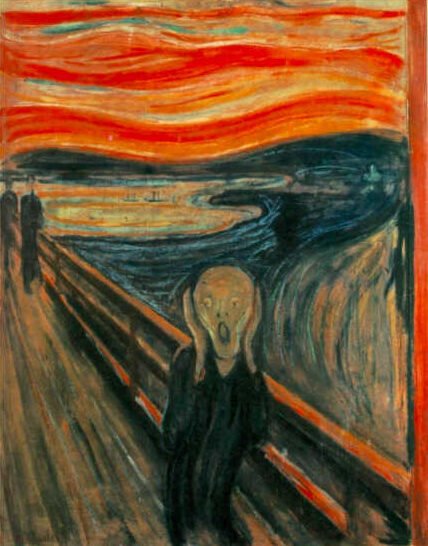
The Scream, 1893
Fuente: https://www.wikiart.org/
They say it comes with age.
But I’m not referring to the kind preached by the self-proclaimed gurus who abound in life, those who talk about being, the ego, the self, self-awareness, superconsciousness, and all those things that remind me of how much I still have to learn.
Over the years, I’ve discovered, the hard way, that true enlightenment lies in knowing how to use that powerful tool known as silence.
In other words, the art of “keeping my mouth shut.”
That form of prudence is something I certainly need to practice, since biting my tongue isn’t my strong suit, especially in my roles as a “gossipy, party timer” grandmother and mother-in-law, as some call me.
It’s not about avoiding creative conflict, which is very healthy, but I admit that blatant confrontation sometimes seduces me.
In this sort of belated “enlightenment,” I’ve internalized that silence is an invitation to reflection, to pause, to set an intention before interrupting or intervening. In short, avoid empty rhetoric when keeping quiet can communicate far more than words.
But there comes a point when all that “guru-like” talk explodes, and my fiery nature betrays me.
Then I set off until I find a discreet bend in the road to let out a discordant shout.
I do it only to remind myself that I have a voice and I won’t hesitate to use it when the time is right.
I don’t know if this “Munchian” (Edward Munch – The scream) exercise aligns with the theme of finding that inner presence and achieving self-knowledge.
For now, I’ll try to practice that maxim: “I am a slave of what I say and master of what I keep silence,” or, in other words, “silence is golden.”
Jorge Luis Borges expresses it more poetically:
“Do not speak unless you can improve the silence.”
