News That Matters

Clifford Thurlow

The little sun god,<br/> by Clifford Thurlow
156b, Clifford Thurlow

The little sun god,
by Clifford Thurlow

leer en español       It was love at first dight when my mum and dad met at the end of World War Two. They were young, penniless and moved in with mum’s parents. Dad had joined the Royal Navy at 17 after forging his birth certificate and spent six years as a gunner on a battleship. Boys his own age had died in his arms. He felt lucky to have survived and determined to have a happy life. My grandparents had lost their home in East London during the Blitz and moved to a big old house in North London with Old Granny, my great-grandmother. My mother had two sisters, Alice and Edna, who visited often with their husbands. The years passed and I was born on a hot July day, the first grandchild, a symbol of light after the post-war darkness. I was surrounded by adults who treated me like...
The fourth man,<br/> by Clifford Thurlow
155b, Clifford Thurlow

The fourth man,
by Clifford Thurlow

leer en español      In the 2012 Olympics, Mo Farah won gold in the 10,000 metres. He went on to win the 5,000 metres and both races again four years later in 2016.His was a great human interest story – the barefoot boy from Somalia who learned to run in the desert and took up athletics after immigrating to the UK. After winning gold, he was chosen as BBC Sports Personality of the Year and was knighted in 2017 by Queen Elizabeth.On the podium with Mo that day in 2012 was the silver medallist Galen Rupp, from the United States, and bronze winner Tariku Bekele, from Ethiopia.Who was the fourth man?He is not listed. For four long years he had trained for this race. He saw the finishing tape come into view at the same time as Mo, Galen and Tariku – and was beaten by a single breath, a heartbea...
El cuarto hombre,<br/> por Clifford Thurlow
Clifford Thurlow

El cuarto hombre,
por Clifford Thurlow

read it in English      En los Juegos olímpicos de 2012, Mo Farah ganó la medalla de oro en los 10.000 metros. Cuatro años después, en 2016, volvió a ganar los 5.000 metros y ambas carreras.La suya fue una gran historia de interés humano: el chico descalzo de Somalia aprendió a correr en el desierto y se dedicó al atletismo tras emigrar al Reino Unido. Tras ganar el oro, fue elegido Personalidad deportiva del año por la BBC y fue nombrado Caballero en 2017 por la reina Isabel.En el podio con Mo aquel día de 2012 estaban el estadounidense Galen Rupp, medalla de plata, y el etíope Tariku Bekele, ganador del bronce.¿Quién era el cuarto hombre?No figura en la lista. Llevaba cuatro largos años entrenándose para esta carrera. Vio llegar la cinta de meta al mismo tiempo que Mo, Galen y Tariku, y ...
Estatuas en vez de árboles,<br/> por Clifford Thurlow
Clifford Thurlow

Estatuas en vez de árboles,
por Clifford Thurlow

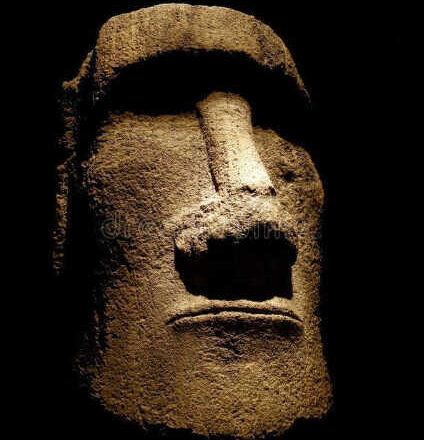
read it in English      Cuando los europeos desembarcaron por primera vez en lo que se conocería como Isla de Pascua en 1722, no se veía ni un solo árbol. Sin embargo, se hizo evidente que la isla alguna vez había sido una exuberante colcha de bosque y follaje.Los isleños habían comenzado a talar los árboles para usar los troncos para hacer rodar las estatuas gigantes llamadas Moai por toda la isla, desde las canteras de piedra hasta el mar. Levantaron las efigies y las colocaron en hileras melancólicas en la costa, como si esperaran la llegada de los barcos. O, tal vez, el regreso de las naves extraterrestres, como especuló Erich von Daniken en su libro 'Carros de los dioses'.Los isleños utilizaban la madera para construir canoas, cocinar y cremar a sus muertos. Cortaron el bosque como si...
Statues instead of trees,<br/> by Clifford Thurlow
154d, Clifford Thurlow

Statues instead of trees,
by Clifford Thurlow

leer en español      When Europeans first landed on what would become known as Easter Island in 1722, there wasn’t a single tree to be seen. Although, it became apparent that the island had once been a luxuriant quilt of forest and foliage.The islanders had begun cutting down the trees to use the trunks to roll the giant statues called Moai across the island from the stone quarries to the sea. They hauled the effigies upright and placed them in melancholic rows on the coast as if waiting for ships to come. Or, perhaps, the return of alien spacecraft, as Erich von Daniken speculated in his book ‘Chariots of the Gods.’The islanders used the wood to build canoes, cook food and cremate their dead. They slashed through the forest as if the resource was infinite and kept cutting down the trees u...