News That Matters

Clifford Thurlow

Jingle-Jangle Morning, by Clifford Thurlow
Clifford Thurlow, 230A

Jingle-Jangle Morning, by Clifford Thurlow

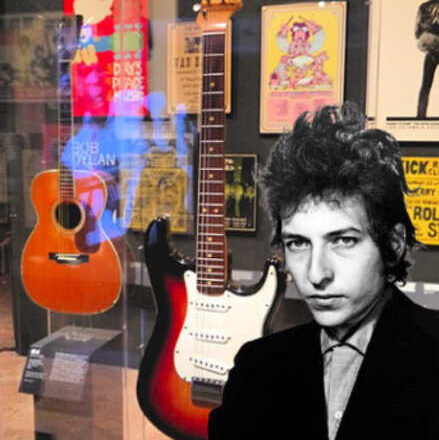
leer en español        In the jingle-jangle morning I’ll come following you.I have always loved that line. It has haunted me since I first heard it, shimmering with promise and uncertainty. For years I thought it must conceal some deeper meaning — a code or hidden message — but now I realise it doesn’t mean anything at all. The words are the meaning. They are beautiful, melodic, alliterative, compelling.We have all woken in the jingle-jangle morning, unsure what the day will bring, and felt that sudden urge to follow our dreams, our lover, our destiny.The line closes the chorus of Mr. Tambourine Man:Hey! Mr. Tambourine Man, play a song for meI’m not sleepy and there is no place I’m going to.Hey! Mr. Tambourine Man, play a song for meIn the jingle-jangle morning I’ll come following you.When...
Mañana Jingle-Jangle, por Clifford Thurlow
Clifford Thurlow

Mañana Jingle-Jangle, por Clifford Thurlow

read it in English        En la mañana jingle-jangle iré siguiéndote.Siempre me ha encantado esa frase. Me ha perseguido desde la primera vez que la escuché, brillando con promesa e incertidumbre. Durante años pensé que debía ocultar algún significado más profundo —un código o mensaje secreto—, pero ahora me doy cuenta de que no significa nada en absoluto. Las palabras son el significado. Son hermosas, melódicas, aliterativas, sugerentes.Todos hemos despertado en una mañana jingle-jangle, sin saber qué traerá el día, y hemos sentido ese impulso repentino de seguir nuestros sueños, a nuestro amante, a nuestro destino.La frase cierra el coro de Mr. Tambourine Man:Hey! Mr. Tambourine Man, play a song for meI’m not sleepy and there is no place I’m going to.Hey! Mr. Tambourine Man, play a song ...
Mitfords at War,<br/> by Clifford Thurlow
Clifford Thurlow, 226c

Mitfords at War,
by Clifford Thurlow

leer en español        The train from Paris pushed south through the Pyrenees. Outside, the mountains loomed cold and jagged against a February sky. Inside, a young woman with a high laugh and a hat borrowed from a friend clutched the arm of her companion. Jessica Mitford was nineteen, the daughter of a baron, the product of country-house rituals and debutante balls. She was also on the run.Beside her sat Esmond Romilly, nephew of Winston Churchill, the sort of reckless boy English families whispered about in drawing rooms and expelled from schools. Together, they were dashing for Spain, a country of bombs, shortages and death. For Jessica – Decca, as she was known – it was not an elopement but a declaration. In 1930s Britain, where appeasers toasted Hitler in Mayfair and dockers rattled p...
La familia Mildford,<br/> por Clifford Thurlow
Clifford Thurlow

La familia Mildford,
por Clifford Thurlow

read it in EnglishEl tren procedente de París avanzaba hacia el sur a través de los Pirineos. Afuera, las montañas se recortaban frías contra un cielo de febrero. Dentro, una joven de risa estridente y sombrero prestado por una amiga se aferraba al brazo de su acompañante. Jessica Mitford tenía diecinueve años, hija de un barón, fruto de rituales en casas de campo y bailes de debutantes. También estaba huyendo.A su lado estaba sentado Esmond Romilly, sobrino de Winston Churchill, el típico chico imprudente del que las familias inglesas hablaban en susurros en los salones y que era expulsado de las escuelas. Juntos, corrían hacia España, un país de bombas, escasez y muerte. Para Jessica —Decca, como la conocían— no era una fuga, sino una declaración. En la Gran Bretaña de los años 30, donde...
The Boxing Parson,<br/> by Clifford Thurlow
Clifford Thurlow, 223c

The Boxing Parson,
by Clifford Thurlow

leer en español In April 1904, in Killarney, County Kerry, Robert Martin Hilliard was born into the comforts of a middle-class family. He would live only 32 years, but in that brief span he became many men: scholar, boxer, clergyman, journalist, communist, soldier. His story is a parable of a turbulent age.Hilliard excelled at Trinity College, Dublin, and fought in the bantamweight division of the 1924 Paris Olympics. He married his childhood sweetheart, Rosemary, fathered four children, and entered the Church of Ireland ministry in Belfast. But he was restless. Poverty on the streets, the rise of fascism in Europe, the limits of pulpit sermons—these gnawed at him. By 1936 he had left the ministry, moved to London, and joined the Communist Party.That same summer, Spain erupted. Franco and ...
El párroco boxeador,<br/> por Clifford Thurlow
Clifford Thurlow

El párroco boxeador,
por Clifford Thurlow

read it in EnglishEn abril de 1904, en Killarney, Condado de Kerry, Robert Martin Hilliard nació en la comodidad de una familia de clase media. Viviría solo 32 años, pero en ese breve lapso se convirtió en muchos hombres: erudito, boxeador, clérigo, periodista, comunista, soldado. Su historia es una parábola de una época turbulenta.Hilliard destacó en el Trinity College de Dublín y luchó en la división de peso gallo en los Juegos Olímpicos de París de 1924. Se casó con su novia de la infancia, Rosemary, tuvo cuatro hijos y entró en el ministerio de la Iglesia de Irlanda en Belfast. Pero era inquieto. La pobreza en las calles, el auge del fascismo en Europa, las limitaciones de los sermones desde el púlpito: todo esto lo corroía. Para 1936, dejó el ministerio, se mudó a Londres y se unió al...
An Artist at War,<br/> by Clifford Thurlow
Clifford Thurlow, 221c

An Artist at War,
by Clifford Thurlow

leer en español        The Aragón plain is a land of heat and silence, broken by the rattle of cicadas and the occasional rush of a train along the Zaragoza–Huesca line. In August 1936, near the small town of Tardienta, a young Englishwoman fell under machine-gun fire. Her name was Felicia Browne—the first British volunteer to die in the Spanish Civil War, and the only British woman to fight as a combatant.Born in Surrey, in 1904, Felicia grew up in a comfortable household but refused the expected path. At sixteen she entered the Slade School of Art, precociously gifted, restless, and impatient with convention. By 1928 she was in Berlin, studying sculpture and apprenticed to a stonemason. There she witnessed the rise of Nazism at close quarters, leaving behind her tools and unfinished work...
Una artista en guerra,<br/> por Clifford Thurlow
Clifford Thurlow

Una artista en guerra,
por Clifford Thurlow

 read it in English          La llanura aragonesa es una tierra de calor y silencio, interrumpida por el canto de las cigarras y el ocasional traqueteo de un tren en la línea Zaragoza-Huesca. En agosto de 1936, cerca del pequeño pueblo de Tardienta, una joven inglesa cayó bajo el fuego de una ametralladora. Se llamaba Felicia Browne, la primera voluntaria británica en morir en la Guerra Civil Española y la única mujer británica en luchar como combatiente.Nacida en Surrey en 1904, Felicia creció en un hogar acomodado, pero rechazó el camino previsto. A los dieciséis años ingresó en la Escuela de Arte Slade, con un talento precoz, inquieta e impaciente por las convenciones. En 1928, ya estaba en Berlín, estudiando escultura y como aprendiz de cantero. Allí presenció de cerca el auge del nazi...
100 Memorials,<br/> by Clifford Thurlow
218d, Clifford Thurlow

100 Memorials,
by Clifford Thurlow

leer en español        It is extraordinary that across Britain there are more than 100 memorials honouring the volunteers from Britain and Ireland who took up arms in the Spanish Civil War.Some 2,500 men and women made the journey to Spain to stem the rising tide of fascism in the 1930s - a threat to social democracy that would devastate Europe in World War II and, a century later, still casts its long shadow.Those who joined the fight for the Spanish Republic came largely from working-class backgrounds: trade unionists, nurses, pacifists who refused to carry arms but carried stretchers instead. There were also writers, artists and intellectuals, most famously George Orwell, who arrived in Barcelona on 26 December 1936 and enlisted with the POUM (Partido Obrero de Unificación Marxista).The...
100 Memoriales,<br/> por Clifford Thurlow
Clifford Thurlow

100 Memoriales,
por Clifford Thurlow

read it in English       Es extraordinario que en toda Gran Bretaña existan más de 100 monumentos en honor a los voluntarios británicos e irlandeses que se alzaron en armas en la Guerra Civil Española. Unos 2.500 hombres y mujeres viajaron a España para frenar la creciente ola de fascismo en la década de 1930, una amenaza para la socialdemocracia que devastaría Europa en la Segunda Guerra Mundial y que, un siglo después, aún proyecta su larga sombra. Quienes se unieron a la lucha por la República Española provenían en su mayoría de orígenes obreros: sindicalistas, enfermeros, pacifistas que se negaban a portar armas, sino que portaban camillas. También hubo escritores, artistas e intelectuales, entre ellos, el más famoso, George Orwell, quien llegó a Barcelona el 26 de diciembre de ...
The inner sea, by Clifford Thurlow
216a, Clifford Thurlow

The inner sea, by Clifford Thurlow

leer en español        Two Greek families crossed the Mediterranean from the Dodecanese island of Symi to Cadaqués in 1850. The men were free-divers, with the lungs and skill to harvest the coral that carpeted the seabed.One day, the exiled writer Narcís Monturiol—branded a communist by the authorities—watched a diver rise dead to the surface. Just as fishermen far out at sea engage in a death dance with every storm, the coraleros risked their lives with every descent.By the time Monturiol returned to his lodgings, he had found his mission. He sent away for books, read engineering journals, and traced the history of man’s ancient desire to breathe underwater.At the temples of Thebes, divers are depicted spear-fishing with hollow reeds as snorkels. In 1515, Leonardo da Vinci sketched a suba...
El mar interior,<br/> por Clifford Thurlow
Clifford Thurlow

El mar interior,
 por Clifford Thurlow

read it in EnglishDos familias griegas cruzaron el Mediterráneo desde la isla de Symi en el Dodecaneso hasta Cadaqués en 1850. Los hombres eran buzos de apnea, con los pulmones y la habilidad para cosechar el coral que cubría el lecho marino.Un día, el escritor exiliado Narcís Monturiol, tildado de comunista por las autoridades, vio a un buzo subir muerto a la superficie. Así como los pescadores en alta mar se enfrentan a un baile con la muerte en cada tormenta, los coraleros arriesgaban sus vidas en cada descenso.Cuando Monturiol regresó a su hospedaje, había encontrado su misión. Mandó a buscar libros, leyó revistas de ingeniería y rastreó la historia del antiguo deseo del hombre de respirar bajo el agua.Así fue como se enteró que en los templos de Tebas se representa a buzos pescando co...